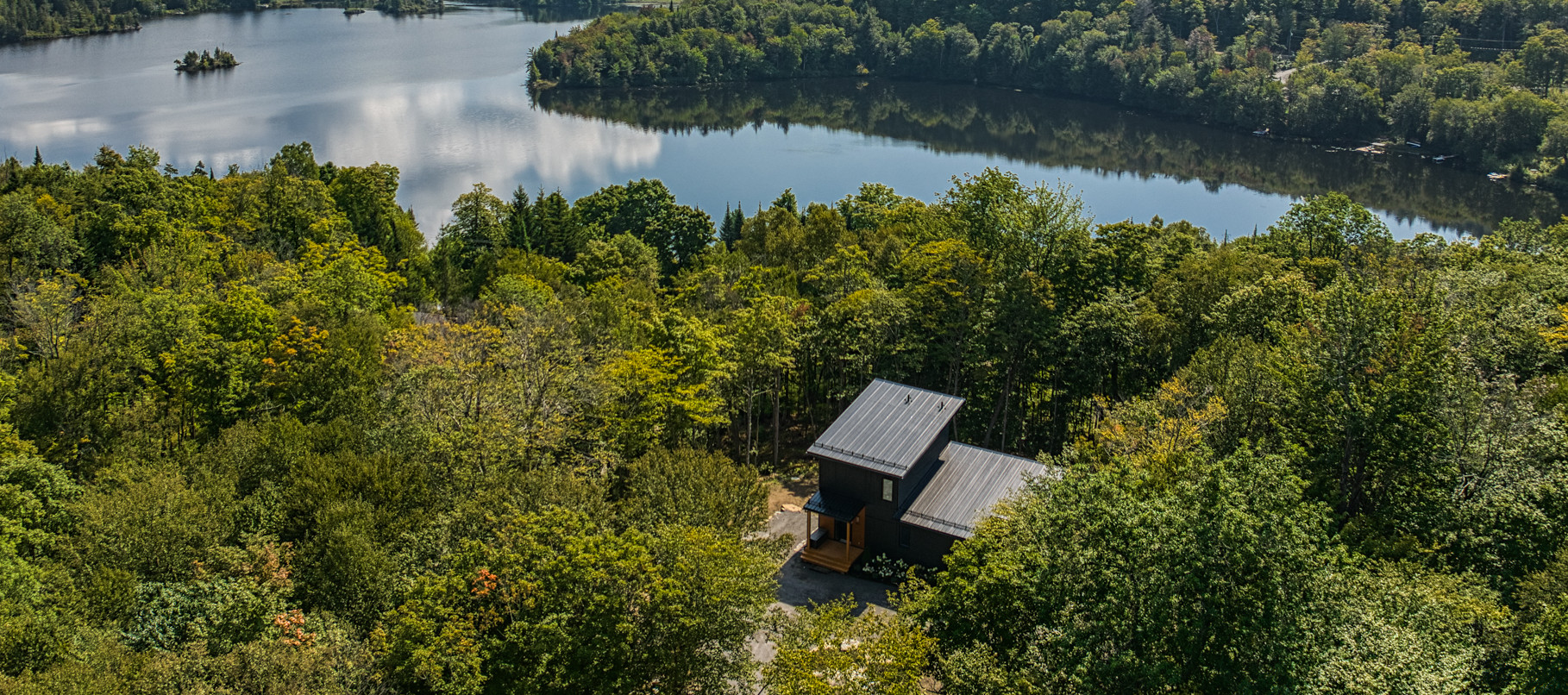
A family cocoon between lake and forest.
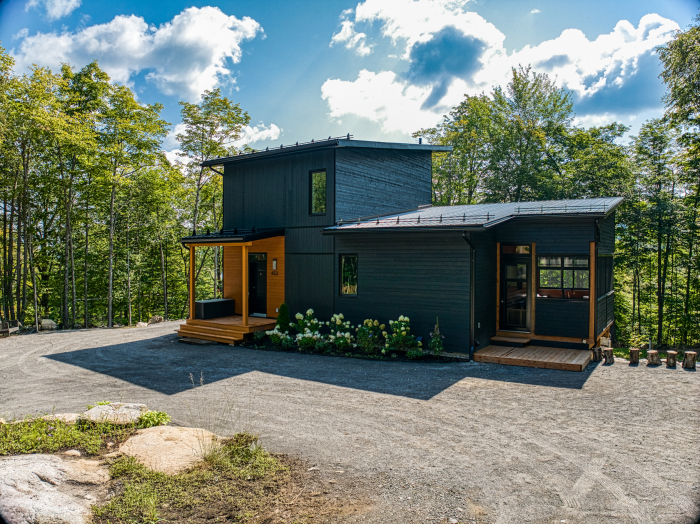
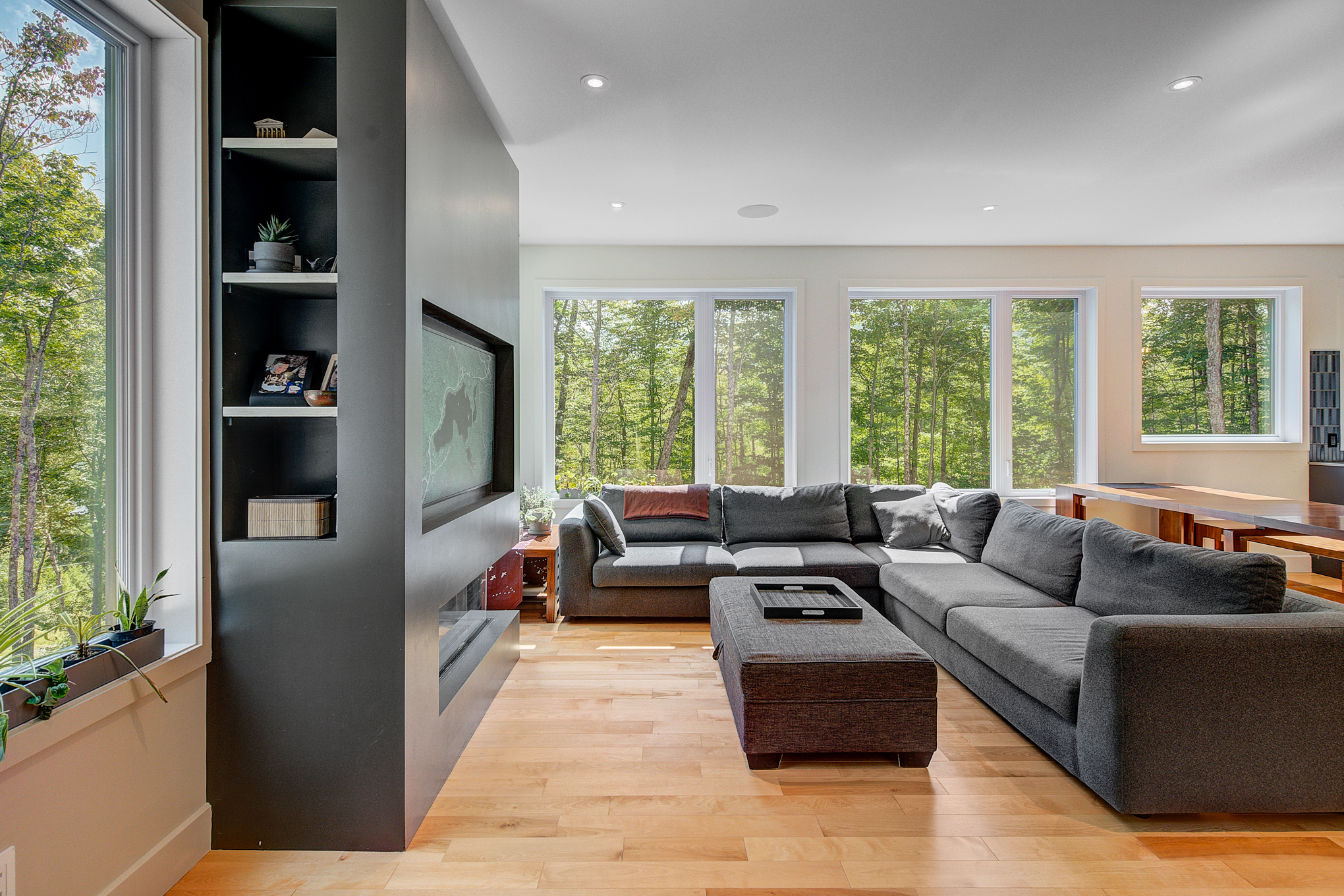
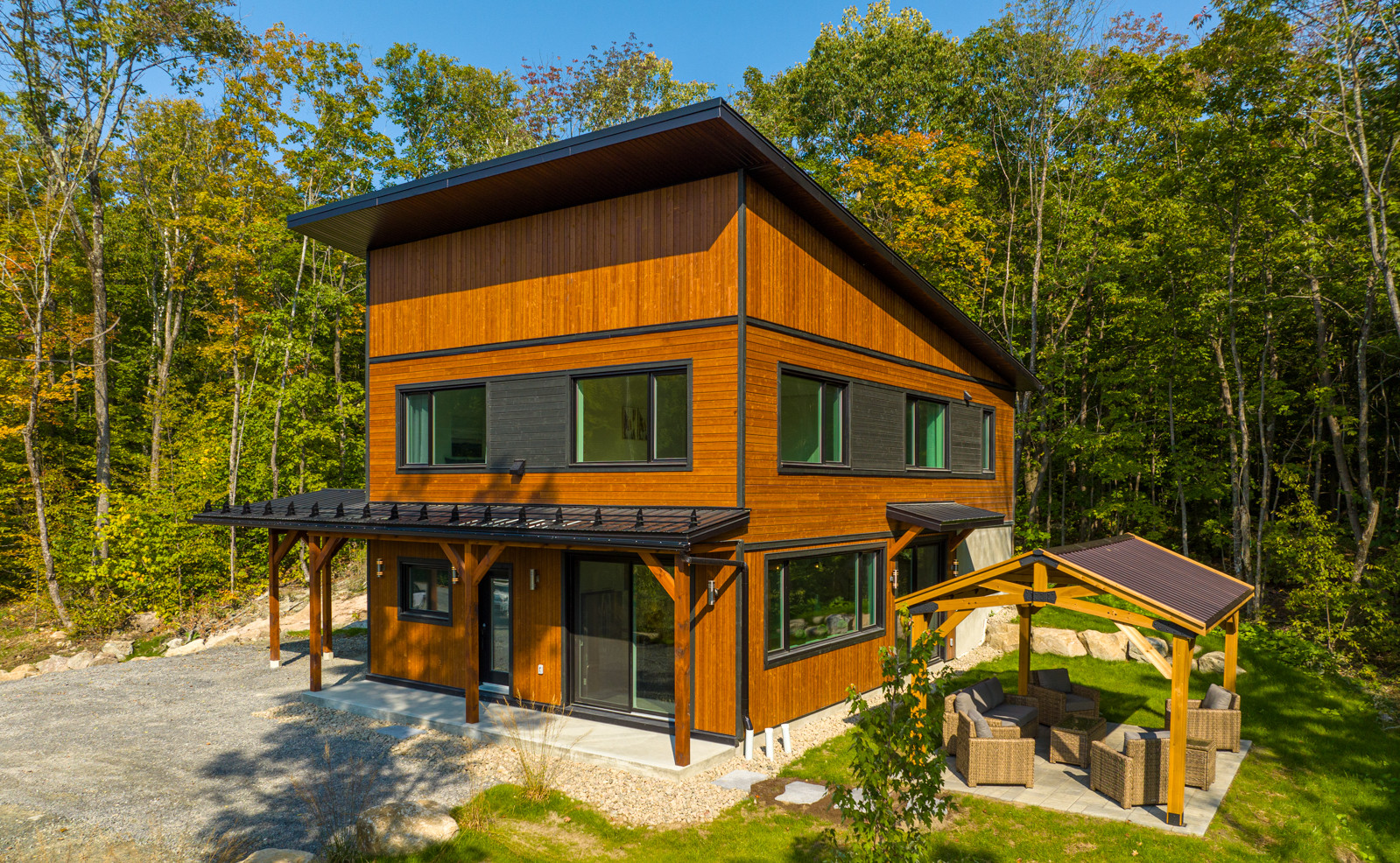
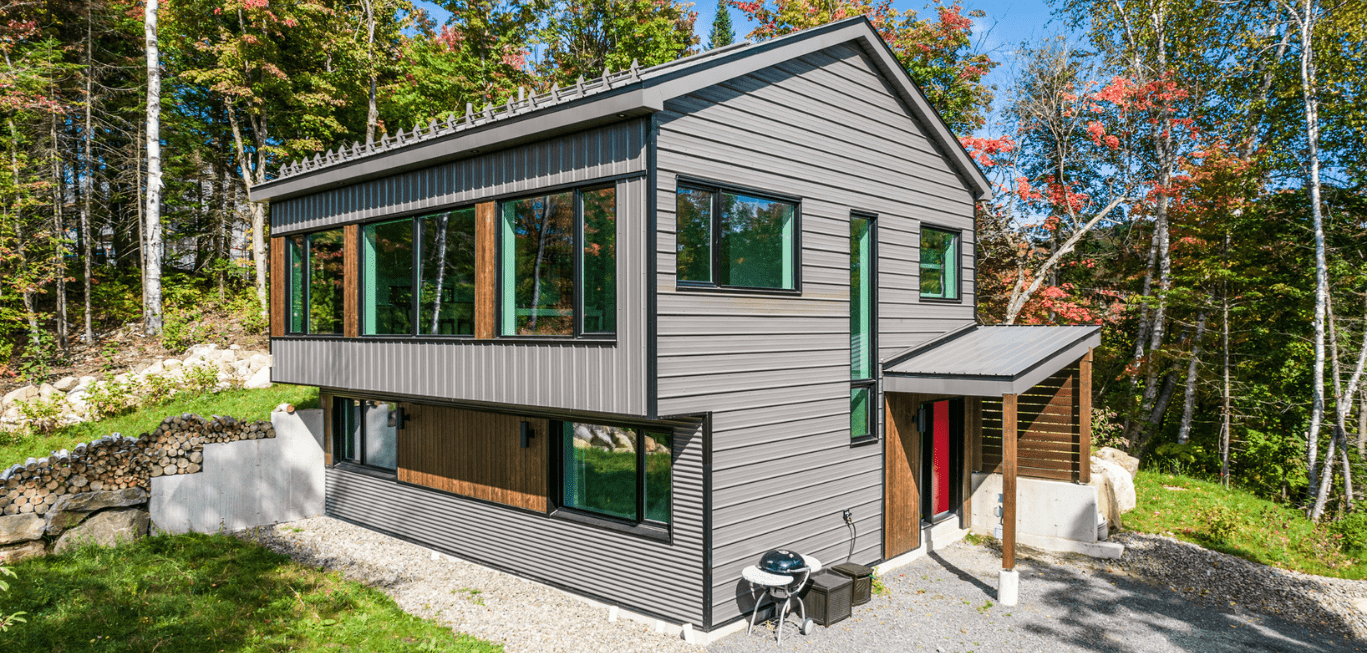
Overlooking a peaceful lake, this residence, designed for a family that lives here year-round, benefits from abundant fenestration, offering a true immersion in the forest from the living areas.
Every volume and every opening has been designed to maximize natural light and lake views, while preserving occupants' privacy. Sober, sustainable materials reinforce the project's coherence, as does its energy performance, which was thought out right from the architectural plans.
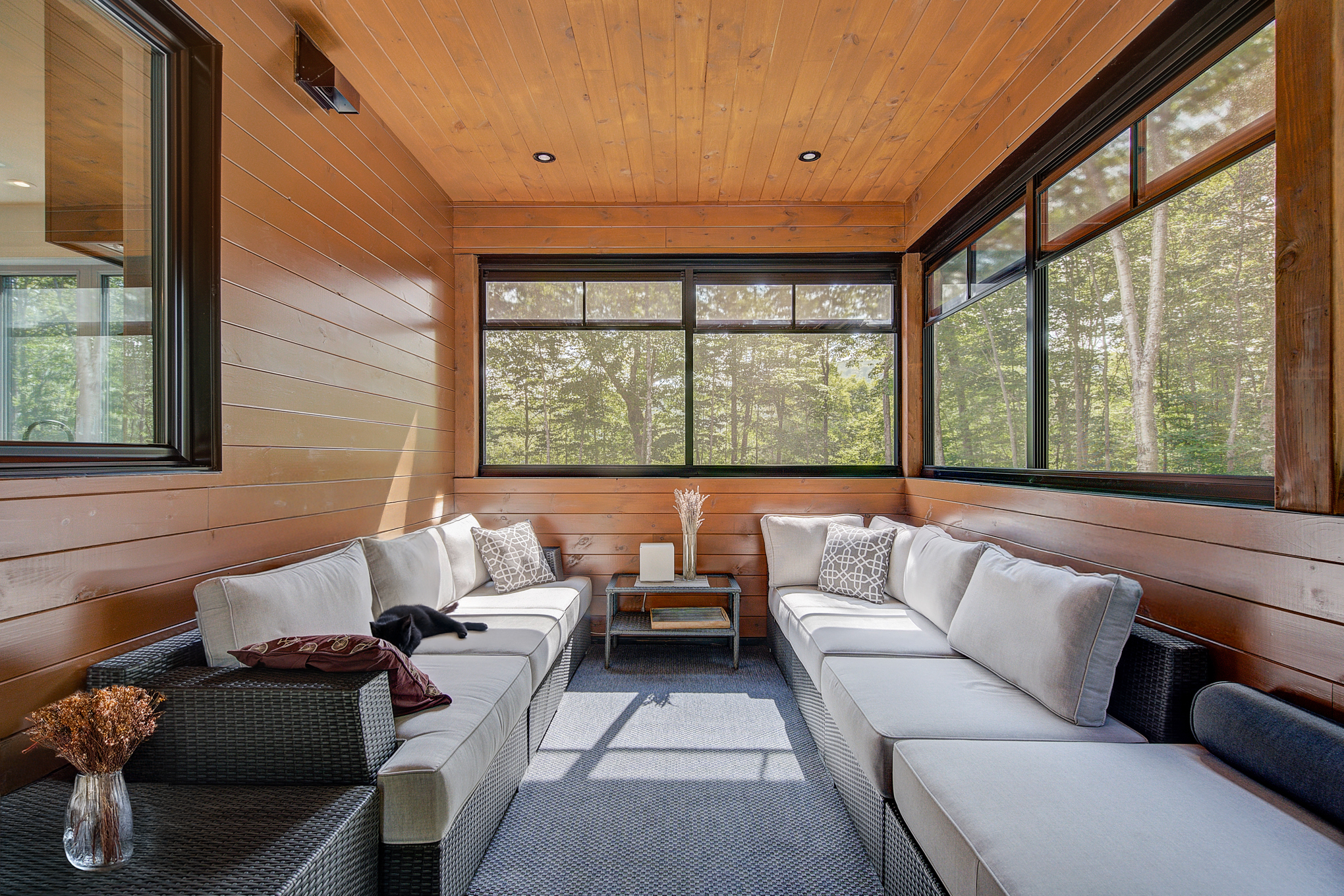
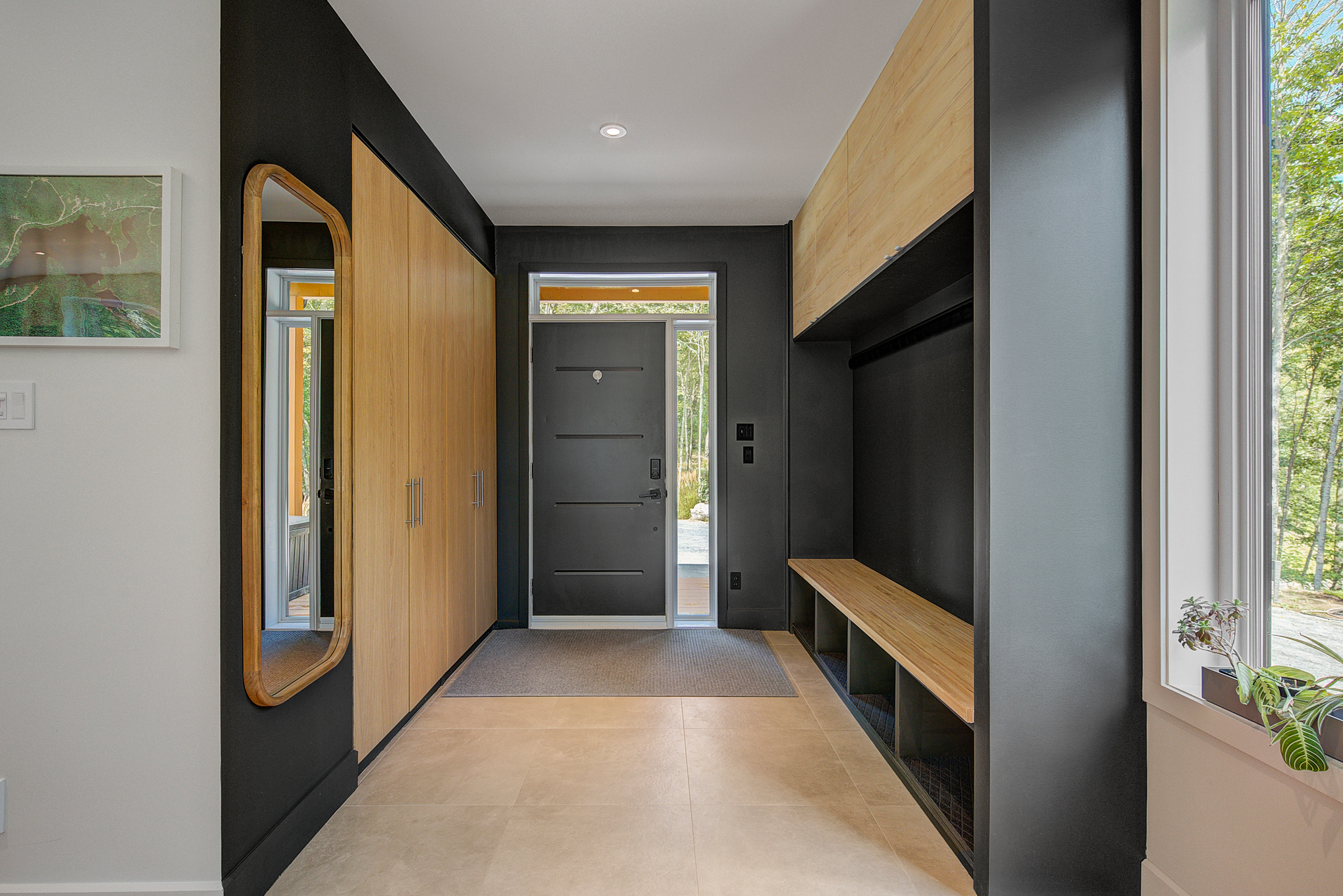
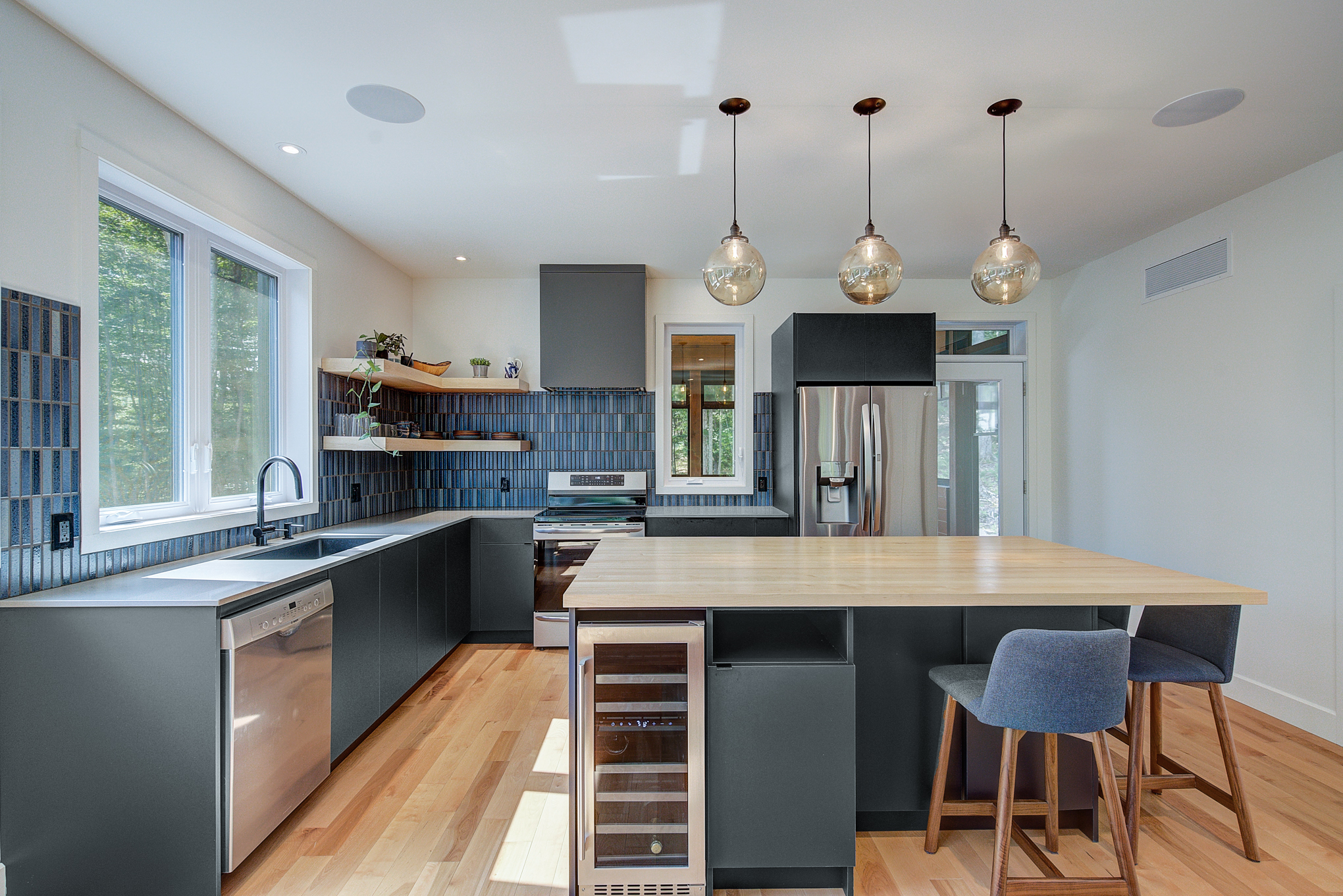
The house follows the flow of the day, from one floor to the next. Upstairs, parents enjoy an intimate space, with bedroom, bathroom and closet all together. On the first floor, communal life comes to life around an open kitchen, a large pantry, a welcoming dining room and a living room bathed in light and open to the forest. The garden level features a multi-purpose room that can be used as an office, ideal for telecommuting inspired by the surrounding nature, or for games and reading, with the children's bedroom just a few steps away, opening onto the garden.
OTHER PROJECTS
What are the timelines required to plan and build a high-performance home?
You should allow a minimum of two months for project planning and at least four months for construction.
However, the time required for construction varies from one house to another (dimensions, finishes, features, etc.), from one lot to another (constraints, access, relief), and even from one city to another (permit issuance period) or from one season to another (weather constraints). Your advisor will give you an overview at the planning stage, and as the start of construction work nears, your construction project manager will give you a schedule. Regular follow-ups will also be carried out throughout the project.
What are the various stages of the project?
The project has three main stages:
- Project analysis: finding a concept that meets your needs and budget. Free of charge, except for the site visit.
- Architectural phase: choosing a plan from our portfolio or creating a customized plan with our architectural department.
- Construction phase.
Is an ecological home more expensive than a standard one?
The extra cost of building an energy-efficient home is estimated at around 4% for the building envelope. However, the energy savings generated are greater than the additional mortgage payment.
The cost of purchasing an ecological home is higher, but the costs associated with its use and maintenance are significantly lower than with a standard home. By buying an ecological home, you’re investing in your health and your future!
Do you offer Novoclimat certification?
Yes, and in fact, Belvedair is one of the very few Novoclimat Select Contractors. High energy efficiency is at the heart of our approach: that’s why all of our homes, without exception, are Novoclimat certified. This Quebec construction standard ensures superior insulation, rigorous airtightness, and consistent thermal comfort, summer and winter alike. In addition to reducing your energy bills thanks to Belvedair’s exemplary energy performance, this systematic certification gives you access to attractive government grants, making your investment even more profitable.
Are your homes LEED-certified?
Belvedair has built more than 40 LEED-certified homes. We have the expertise to guide you through the LEED certification process, if that is your goal. This is a prestigious international recognition that verifies, through independent inspectors, that your home is environmentally friendly. All Belvedair homes adhere to the principles of sustainability and high-level eco-friendly design, and we would be happy to assist you if you wish to pursue LEED certification.
Is it possible to build an eco-friendly home on a limited budget?
Absolutely, affordability is at the heart of our mission. To help you realize your dream without compromise, we offer a catalog of eco-friendly house plans featuring optimized and affordable designs. For those who want to get more involved, our “Ready to Finish” package is an excellent option: it allows you to take on certain finishing tasks to reduce labor costs.